



Signal and Equipment
Can Neurofeedback Sensors Read Your Thoughts?
Learn what scalp sensors detect during a microcurrent neurofeedback session, what they cannot reveal, and which privacy questions to ask.
7 October 2026. 8 minute read.

Signal and Equipment
By the session practitioner. Published 21 October 2026. Updated 21 October 2026. 6 minute read.
Drafted with AI assistance, then reviewed, edited where needed, and approved by the author above before publication.
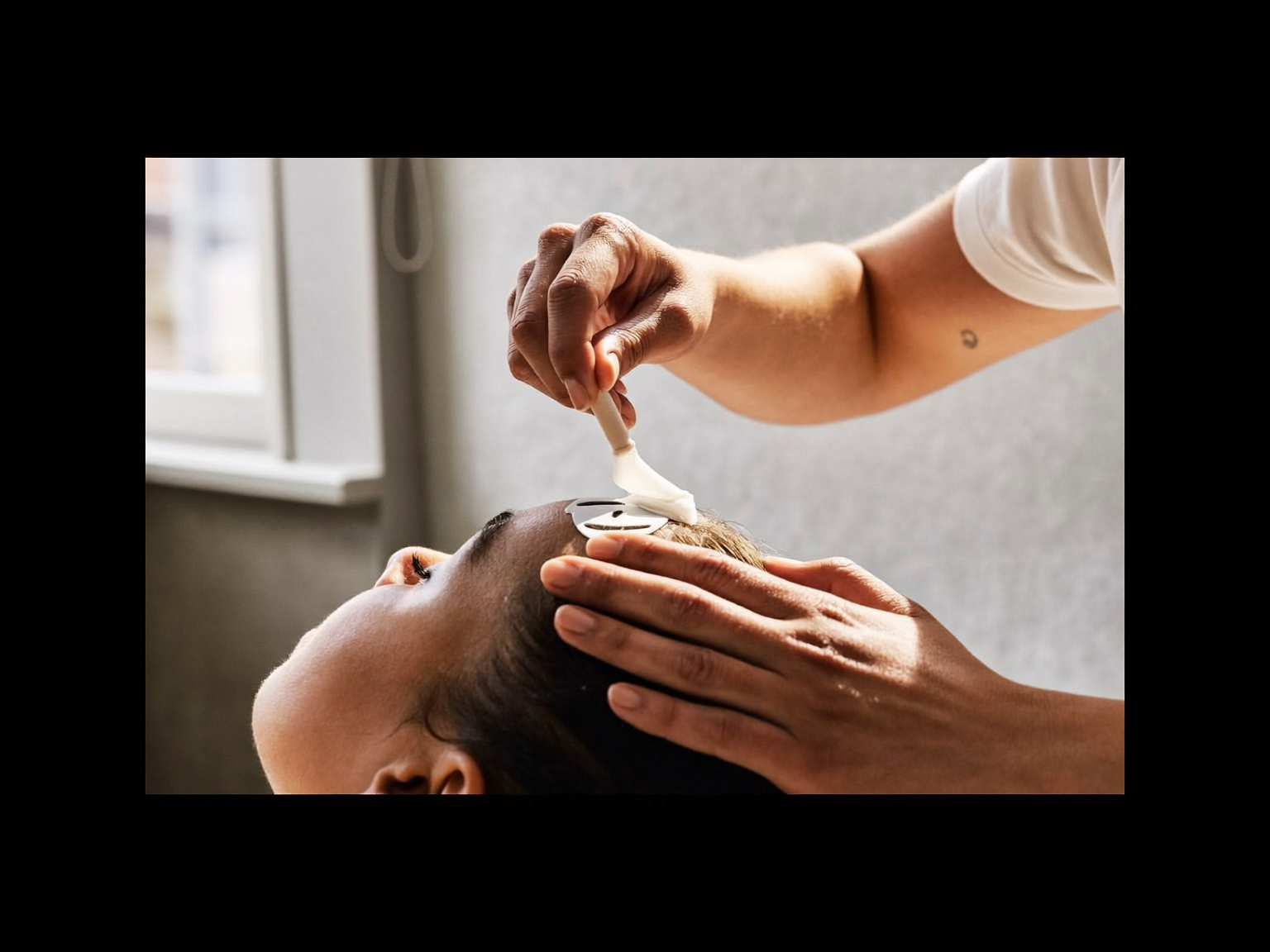
Conductive paste is used to create steady contact between a scalp sensor and the skin. It fills tiny gaps caused by hair, skin texture, and movement so the equipment can maintain the intended connection during a session.
The paste is part of the physical setup, not a control for the session level. Using more paste does not increase the programmed signal, and the amount of paste does not tell us what a person will notice during or after a session.
A scalp may look smooth, but the contact surface is uneven. Hair crosses the placement area, skin has natural texture, and small air gaps can remain under a sensor. Air does not conduct well, so direct placement without a conductive medium can produce an inconsistent connection.
Conductive paste fills those small spaces and gives the sensor a more continuous contact surface. In equipment terms, this helps manage impedance, which is the resistance at the point where the sensor meets the skin. We are not trying to remove all resistance. We are looking for a stable connection that falls within the equipment maker’s operating guidance.
The paste also helps the sensor remain in its intended position when someone shifts slightly in the chair. It is not the only part of good placement. We still part the hair carefully, identify the placement area, check the sensor, and keep the cable from pulling. Readers who want the broader setup sequence can review our guide to sensor placement.
No. Conductive paste is made for electrical contact, while ordinary hair gel is made for styling and glue is made to bond materials. They may share a thick or tacky texture, but they are not interchangeable.
The exact consistency varies by product. Some conductive media feel like a soft paste, while others are closer to a thick gel. A product may be water soluble and still require shampoo to come out fully, especially when it has been worked close to the scalp. We tell clients what we use rather than assuming every conductive product behaves the same way.
We also distinguish between holding a sensor in place and creating conductive contact. Tackiness may help with positioning, but that is not its primary purpose. The important question is whether the product supports a steady interface without unnecessary mess or pressure. We use only the amount needed for that job.
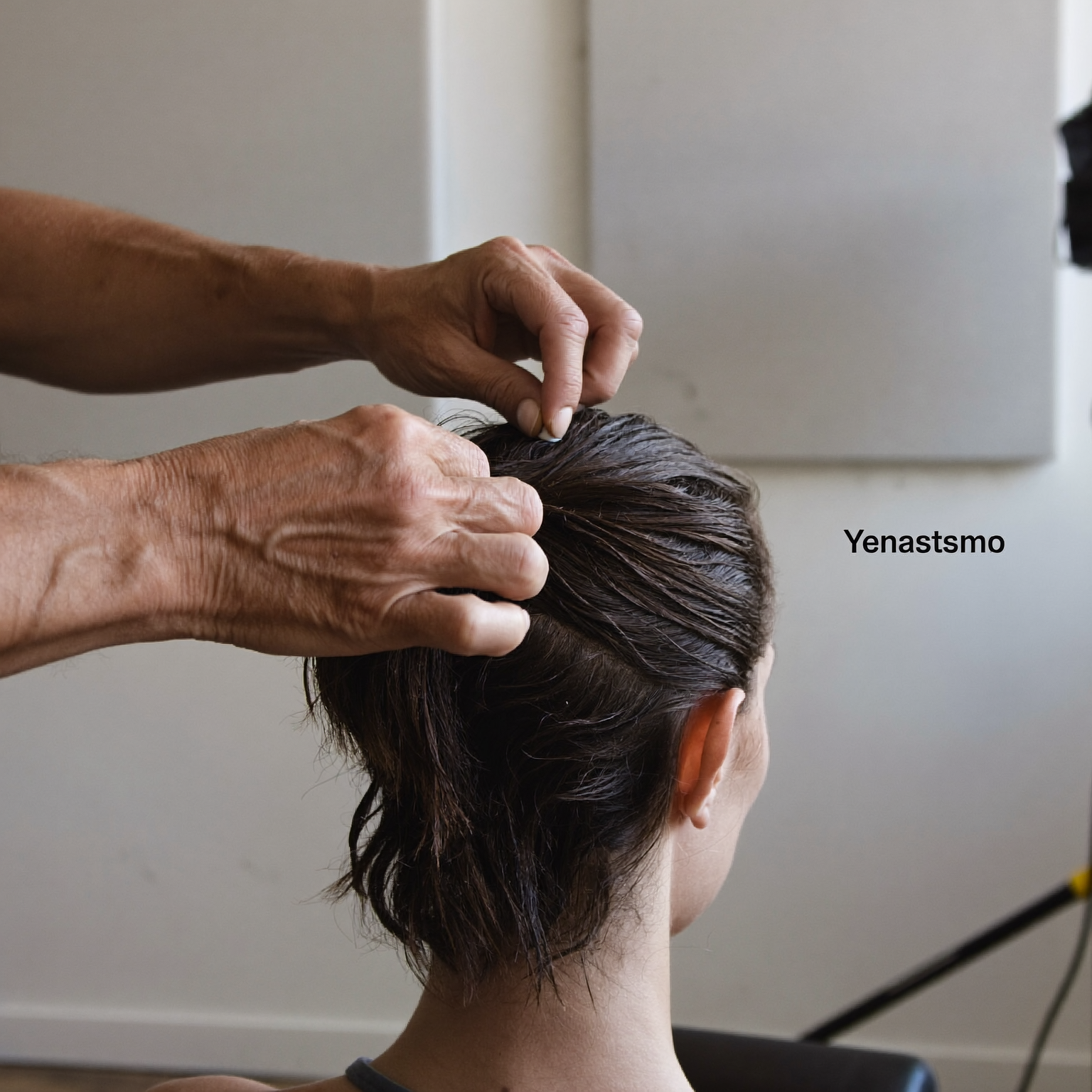
Most people notice a cool, damp, or slightly tacky spot where the sensor is placed. Hair may feel separated or flattened around that area. The sensation comes from the paste and the physical placement, not from the programmed signal itself.
You may also notice light pressure while we part the hair and position the sensor. We work slowly enough to avoid pulling strands or scraping the scalp. If the placement pinches, tugs, feels hot, or becomes uncomfortable, we want you to say so. We can pause, inspect the area, and reposition the sensor.
A quiet setup is useful because it lets us separate ordinary contact sensations from anything unexpected. We do not need a client to remain silent or tolerate discomfort for the equipment to work as intended. Clear feedback about the physical setup helps us correct simple issues before continuing.
We use enough paste to bridge the sensor to the skin, but not so much that it spreads widely through the hair. The appropriate amount depends on the sensor shape, hair density, placement area, and the consistency of the product. That is why a fixed household measurement is less useful than checking the actual connection.
More paste is not automatically more precise. A large amount can make placement harder to see, allow the sensor to slide, or create more cleanup without improving contact. Too little may leave hair or air between the sensor and the skin. We look for a neat application that supports a steady equipment check.
We also avoid using paste as a shortcut for poor positioning. If hair is trapped beneath the contact point, adding another layer may not resolve the problem. Parting the hair again and resetting the sensor is often the clearer approach. Our overview of the signal explains why the programmed output and the quality of the physical connection are separate parts of the setup.
No. Conductive paste is not a strength control. The device settings determine the programmed output, while the paste supports the contact pathway between the sensor and the scalp. Adding extra paste does not raise the selected level.
This distinction matters because people sometimes associate a larger amount of product with a larger session input. That is not how we set up the equipment. We select settings through the device controls and manage contact through placement, paste, cable position, and connection checks.
We also do not interpret a messy application as evidence that more happened in a session. Paste quantity is a setup detail, not a measure of what someone may notice. A careful application is simply easier to monitor and easier to clean afterward.
If a connection becomes inconsistent, we pause and check the ordinary causes first. A person may have shifted, the cable may be pulling, hair may have moved beneath the sensor, or the paste may no longer cover the contact point evenly. We do not assume that the person did anything wrong.
We may reseat the sensor, part the hair again, apply a small amount of fresh paste, or adjust the cable so its weight is not affecting placement. We also inspect the sensor and its connection to the equipment. These steps help us identify whether the issue is at the scalp, along the cable, or at the device connection.
We do not compensate for poor contact by simply increasing a setting. Contact quality and programmed level are separate variables, and we handle them separately. Our session protocols page provides more context on how consistent procedures support a clear, repeatable studio process.
Start by blotting or lifting away any visible excess rather than rubbing it through more hair. Once home, warm water and your usual shampoo are generally the practical first steps for a water-soluble conductive paste. Working the shampoo into the exact placement areas before rinsing can be more useful than washing the ends of the hair repeatedly.
Thick or textured hair may need more deliberate attention at the scalp because paste can remain close to the roots. Use your fingertips rather than scratching with your nails. If some residue remains, another gentle wash may be preferable to forceful scrubbing.
Before leaving the studio, you can ask us where each sensor was placed so you know which areas to check. You can also ask whether the specific product has cleanup instructions from its maker. If you plan to go directly to work, an event, or another appointment, our what to bring page can help you plan for simple post-session grooming.
Yes. We should be able to identify the product used during your session and explain why it is part of the setup. You may also ask to see the container or review the maker’s ingredient information before placement.
Tell us in advance if your scalp often reacts to cosmetics, styling products, or adhesives, or if you have broken skin in a likely placement area. We can discuss the setup and decide whether scheduling should proceed. We do not promise that any contact product will feel the same for every person.
Questions about paste, sensors, cables, cleaning, and device settings are reasonable equipment questions. We prefer to answer them before placement rather than rush through them once you are in the chair. Our safety and suitability information outlines other details worth sharing with us before a session.
Your Care and Comfort Matter
Momentous Neurofeedback is a wellness practice using advanced neurofeedback technology to support relaxation and nervous system regulation.
The IASIS i2 Relaxation Neurofeedback System is an FDA-cleared biofeedback device indicated for relaxation training and muscle reeducation.
Our services are not a substitute for medical care, we do not provide medical care, and we do not assess or identify health conditions. Individual experiences vary. If you have questions about your health or whether neurofeedback is appropriate for you, please speak with your licensed healthcare provider.
We are always happy to answer questions about what we do and what you can expect before your first visit.
About the Author
Session practitioner
Sessions and equipment log
Runs sessions across the week and keeps the equipment log. Prefers a slow start over a full schedule.
Talks people through what a session feels like, including the parts that feel like nothing at all.
Signal and Equipment
Learn what scalp sensors detect during a microcurrent neurofeedback session, what they cannot reveal, and which privacy questions to ask.
7 October 2026. 8 minute read.
Signal and Equipment
Learn how clean, dry hair, light styling products, and simple hairstyles make scalp sensor placement easier before a studio session.
16 September 2026. 6 minute read.

Signal and Equipment and Regulatory and Claims
The phrase covers several unrelated services that share only the size of the current. Here are the questions that tell them apart.
2 March 2026. 2 minute read.