





Organizations
Onsite and Mobile Delivery
Onsite delivery means we bring the equipment to your premises and run sessions in a room you provide, for an agreed number of delivery days. Mobile delivery is the same arrangement rotating across more than one site.
It suits organizations whose people cannot easily leave a site. It is a worse fit wherever a suitable private room does not exist.
What Does a Site Need to Provide?
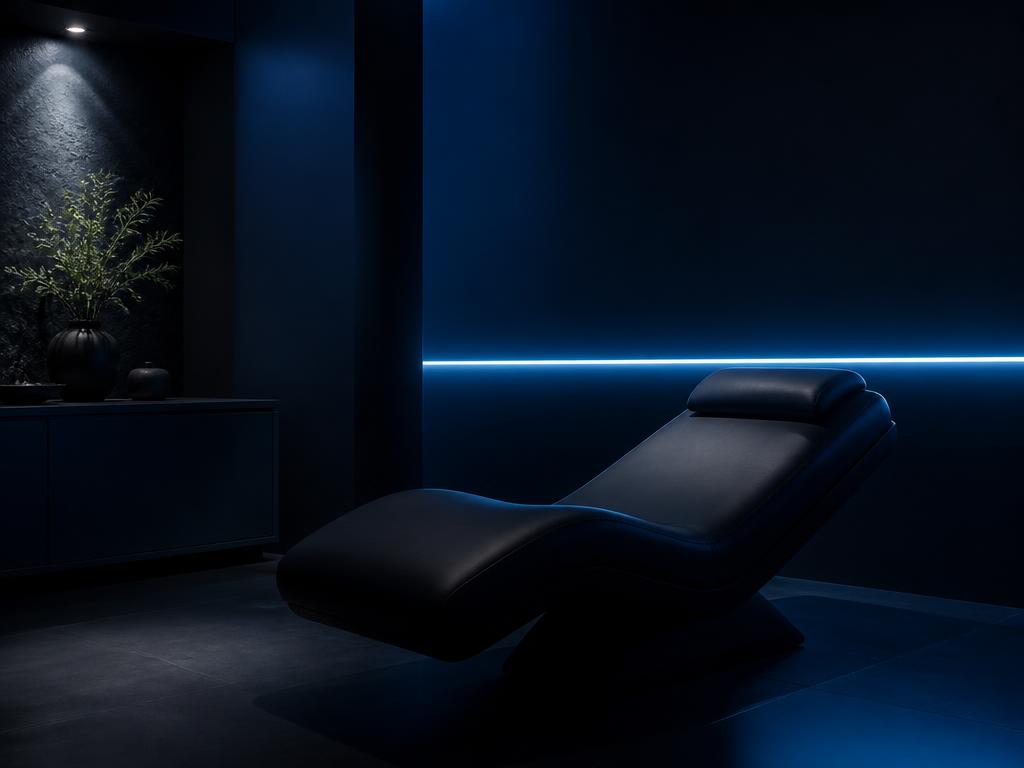
One room that can be closed, kept quiet, and used by the same practitioner all day. Not a meeting room with a glass wall onto a corridor, and not a room someone else needs at midday.
If a site cannot offer that, we will say so rather than deliver a compromised version of it.
- A private room with a door that closes, for the whole delivery day.
- A comfortable chair or recliner, or space for us to bring one.
- Mains power within reach of the chair.
- A quiet approach, so people are not queued in a busy corridor.
- Site access arranged in advance for the practitioner and the equipment.
How Is Privacy Protected on an Employer's Premises?
The room is booked as a block of time and not as a list of names. We do not post a schedule, we do not hold a sign in sheet at reception, and we do not confirm to anyone on site who is coming or when.
Where possible we ask for a room that is not overlooked and not next to the cohort's own workspace. The anonymity model applies unchanged onsite, including the fact that we never hold the code to person mapping.
When Is In-Clinic the Better Option?
Whenever the building itself is the privacy problem. On a small site, being seen walking into the room is the whole disclosure, and no scheduling trick fixes that.
In-clinic is also better where the cohort is spread out geographically, because a delivery day only serves the people who can reach that site on that day.
Can a Program Mix Both?
Yes, and most do. A common shape is a small number of onsite delivery days for convenience, with the same seat block usable in our rooms for anyone who would rather come to us.
Because a seat is a funded session rather than a place on a list, using it onsite or in-clinic makes no difference to the contract.
Questions People Ask About This

From the Journal
Related notes on practice standards
Longer writing that expands on this page, from the people who run the sessions.
- Why We Publish What We Do Not KnowPublishing our open questions is a commercial disadvantage and we do it anyway. The reasoning, and what it costs us.4 minute read
- Regulatory Claim vs MarketingRegulatory language and marketing language look similar on a web page. Six practical tests for telling them apart in seconds.5 minute read
- Why We Start at the Gentlest LevelA gentle first session is a deliberate operating rule, not caution for its own sake. Here is the reasoning and what it costs you.5 minute read
Your Care and Comfort Matter
Momentous Neurofeedback is a wellness practice using advanced neurofeedback technology to support relaxation and nervous system regulation.
The IASIS i2 Relaxation Neurofeedback System is an FDA-cleared biofeedback device indicated for relaxation training and muscle reeducation.
Our services are not a substitute for medical care, we do not provide medical care, and we do not assess or identify health conditions. Individual experiences vary. If you have questions about your health or whether neurofeedback is appropriate for you, please speak with your licensed healthcare provider.
We are always happy to answer questions about what we do and what you can expect before your first visit.
Tell Us About the Site
Describe the room and the population and we will tell you honestly whether onsite delivery is the right shape for it.