


Signal and Equipment
Should I Wash My Hair Before a Session?
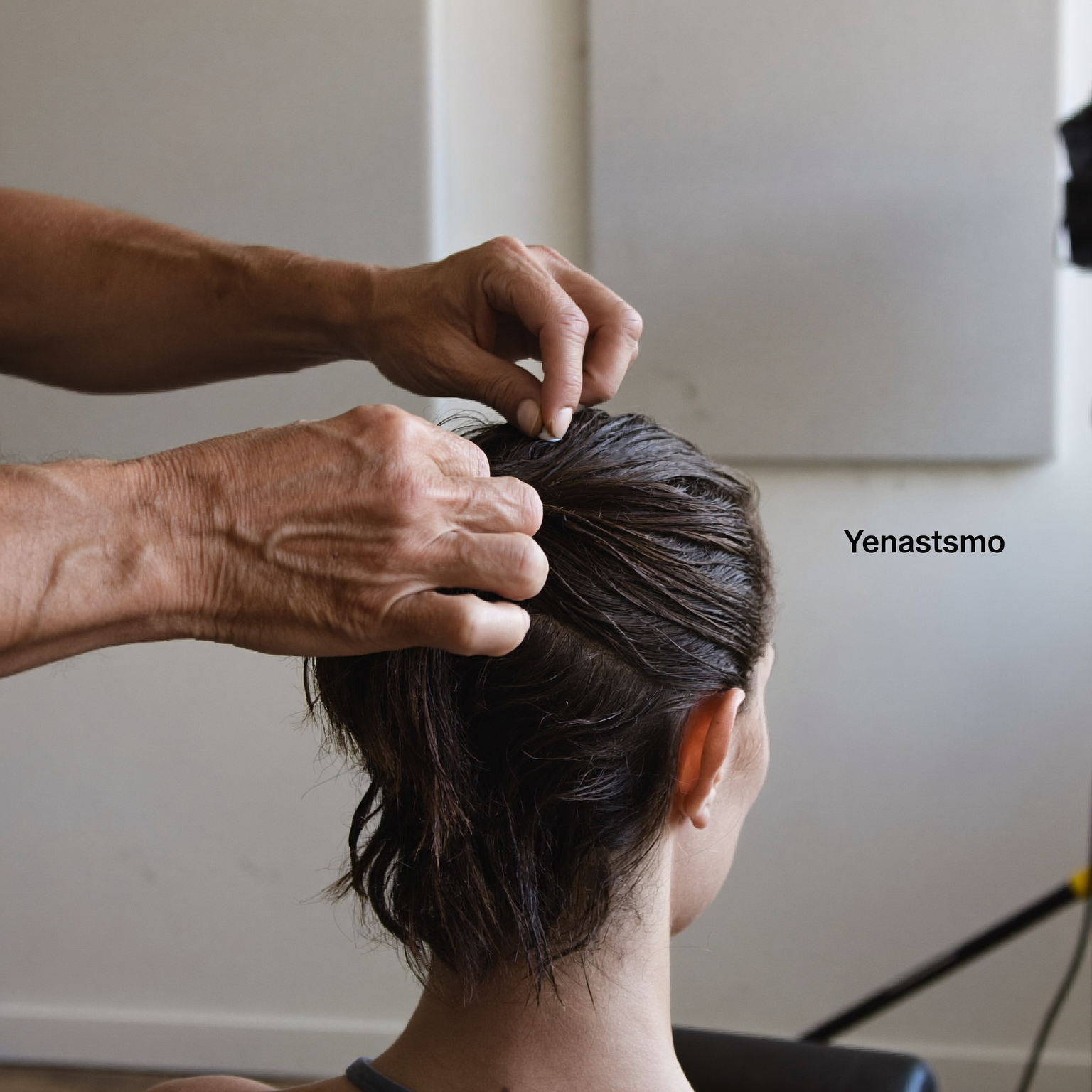
Learn how clean, dry hair, light styling products, and simple hairstyles make scalp sensor placement easier before a studio session.
16 September 2026. 6 minute read.
Signal and Equipment
By the studio lead. Published 2 March 2026. Updated 2 March 2026. 2 minute read.

Microcurrent therapy is an umbrella phrase for services built around a current measured in millionths of an ampere, and it is not the name of one method, one device, or one standard of practice.
That matters when you are comparing providers, because two places using the identical phrase can be doing entirely unrelated things with different equipment and different training.
Because nobody owns it. No regulator or professional body defines the phrase, so it drifted into general marketing use for anything involving a very small current.
The result is that a facial service, soft tissue work on a shoulder, a home gadget bought online, and a passive session with scalp sensors all end up described the same way in search results. The current size is the only thing they reliably share.
Four questions do most of the work, and any provider should be able to answer them without hedging.
If an answer arrives as a promise rather than a description, that itself is useful information. Descriptions are checkable. Promises are not.
It is passive and it is aimed at the nervous system rather than at appearance or a muscle. Sensors sit on the scalp, the equipment reads existing electrical activity, and it returns a brief pulse lasting a fraction of a second.
You sit still. There is nothing on a screen to follow and no skill to practice, which is the part most people find surprising when they arrive expecting a workout for the brain.
Language, mostly. A provider describing a wellness service as approved rather than cleared has either misread a regulatory document or is hoping you will.
The same goes for a stated number of visits sold as a certainty, or a page pairing a named condition with an outcome verb. Our page on reading clearance language walks through the wording difference in detail.
Our plain-language page on the umbrella phrase sets the three main uses side by side, covers what our equipment is cleared for, and answers the questions we get asked most before a first visit.
If you would rather ask a person, our studio is in Arvada and a short consultation costs you nothing but the time.
Your Care and Comfort Matter
Momentous Neurofeedback is a wellness practice using advanced neurofeedback technology to support relaxation and nervous system regulation.
The IASIS i2 Relaxation Neurofeedback System is an FDA-cleared biofeedback device indicated for relaxation training and muscle reeducation.
Our services are not a substitute for medical care, we do not provide medical care, and we do not assess or identify health conditions. Individual experiences vary. If you have questions about your health or whether neurofeedback is appropriate for you, please speak with your licensed healthcare provider.
We are always happy to answer questions about what we do and what you can expect before your first visit.
About the Author
Studio lead
Session practitioner and studio lead
Runs sessions and looks after the room. Explains the equipment before anything is attached, and stops if you want to stop.
Handles the first conversation for most new visitors, which is where expectations get set plainly rather than optimistically.
Signal and Equipment
Learn how clean, dry hair, light styling products, and simple hairstyles make scalp sensor placement easier before a studio session.
16 September 2026. 6 minute read.

Practice Standards and Regulatory and Claims
Publishing our open questions is a commercial disadvantage and we do it anyway. The reasoning, and what it costs us.
3 March 2026. 4 minute read.

Signal and Equipment and Sessions
The 10-20 system is a naming convention for scalp positions. Here is how it works and why placement gets written down every visit.
24 February 2026. 4 minute read.