




Why People Come
Trauma and Post-Traumatic Stress
For People Whose Nervous System Can Stay on Alert Long After the Immediate Danger Has Passed.
Some people arrive at Momentous because something happened, and their body has not yet agreed that it is over. The event may be years behind them. The alertness is present tense.
It usually shows up as a system that reacts faster and settles slower than the person wants. A door closing too hard. A tone of voice. A smell in a parking garage. The reaction arrives before any thinking does, which is exactly why reasoning with it rarely works.
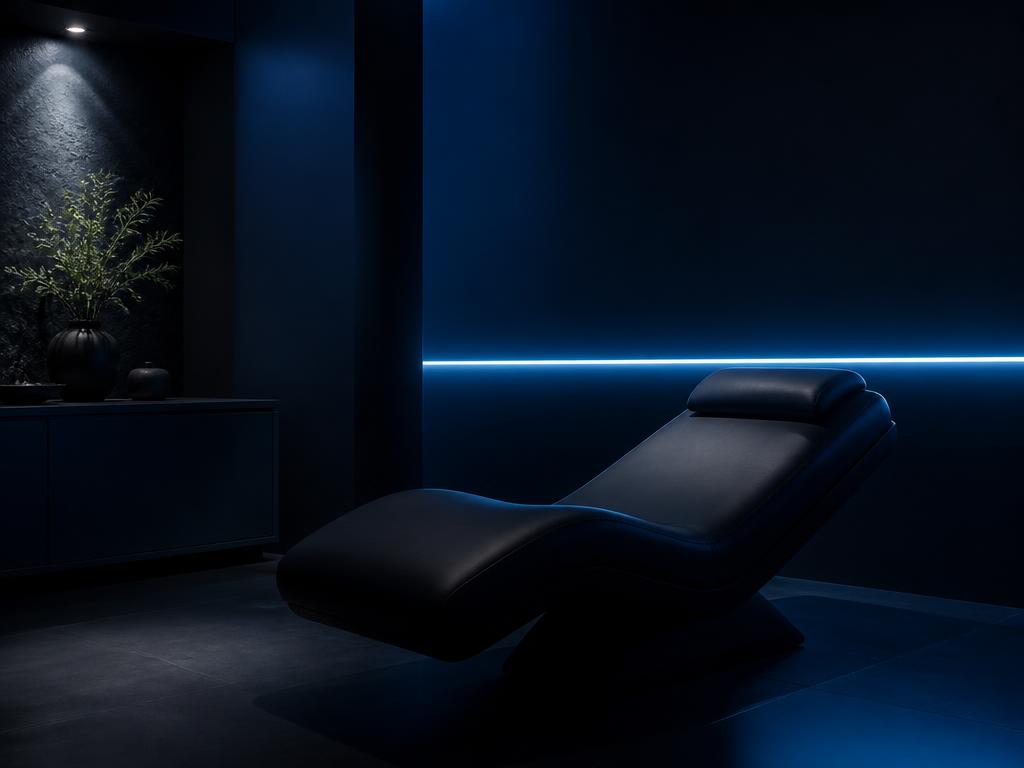
Momentous offers passive microcurrent neurofeedback in Arvada and Broomfield, with sessions intended to support relaxation and stress reduction. This page describes where a session can sit alongside proper mental health care, and it is careful to say what a quiet room cannot do.
Alertness that outlives the event is a regulation pattern, not a character flaw.
A Closer Look
Alertness, Recovery, and Where a Session Fits
What Do People Describe When the Nervous System Stays on Alert?
Less a memory problem than a timing problem. The alarm still works. It simply keeps arriving for things that are not alarming, and it takes a long time to stand down afterward.
People tell us about scanning a room before sitting down, sleeping lightly, startling at ordinary noise, and needing an hour to come back to baseline after a two-minute moment. Many of them are functioning well at work and are tired of being told they seem fine.
- Reacting before you have had time to think
- Taking a long time to come back down afterward
- Sleeping lightly, or waking fully at small sounds
- Feeling braced in the body with no obvious reason
- Avoiding places and sounds that used to be neutral
- Swinging between switched on and completely flat
Why Does This Connect Back to the Brain and Nervous System?
We do not chase symptoms. We work with the brain and nervous system, the control center behind them.
Your nervous system has a gear that prepares you to act and a gear that lets you recover. After a period of real danger, the first gear can become the default, because at the time that was useful. The pattern outlives its usefulness without asking permission.
That is why the effects are rarely confined to memory. Sleep, digestion, patience, attention, and how long irritation lingers all lean on the same regulation, which is why people usually describe several of these at once.
Where Does Microcurrent Neurofeedback Fit Here?
As one passive input inside a plan that should include qualified mental health care. Small sensors sit at points around the cranium, the system reads brainwave activity, and it returns a very brief, very low microcurrent signal. You sit in a chair and do nothing.
The passive part matters for this group in particular. There is no story to tell us, nothing to relive, no task to perform, and no screen asking you to hold your focus. People who find talking exhausting sometimes prefer that a session asks nothing of them at all.
It is not a substitute for working with a licensed professional, and we will say so in the room as readily as we say it here.
- No account of the event is required to book
- Nothing to practice, perform, or hold focus on
- You can stop at any point in an appointment
- Sessions can be scheduled around existing care
- Anonymity is the default in how we handle your details
What Do People Notice After a Session?
It varies, and we will not predict yours. The comment we hear most is about recovery time: something that would usually take an hour to settle took less.
Some describe the evening after a session as quieter. Some notice nothing. A few feel briefly tired or foggy for an hour or two. Any of those are worth telling your practitioner, because that feedback shapes the pace of what happens next.
Do I Have to Talk About What Happened?
No. We do not need the story, and we do not ask for it. We need to know how you would like the session paced and anything that would make the room feel less comfortable.
What If I Feel Unsettled During a Session?
Say so and we stop. That is a normal request and not an inconvenience. You keep your phone, the door is not locked, and nothing continues without you.
What Does the Research Actually Say?
There are two different bodies of work here and they are easy to confuse. The larger one covers traditional EEG neurofeedback, where a person trains over many sessions with visual or audio feedback. That literature spans decades and is uneven in quality. The smaller one covers microcurrent systems like the one we use, and it is early, mostly small, and often uncontrolled.
IASIS Technologies, which makes the system in our studio, maintains a practitioner-facing list of published papers and case reports involving its device. We read it, we take it seriously as a starting point, and we also note that much of it consists of small samples without control groups. We cite it as a source of interest rather than as evidence of an outcome, and we do not send people to a manufacturer page to make up their minds.
Where a study exists that is worth your time, we say what it measured and how small it was on our own research pages rather than counting citations at you.
What We Will Not Tell You
We will not say this addresses post-traumatic stress as a health condition, because it does not, and we are not qualified to. We will not name a number of sessions. We will not show you a before-and-after score.
If what you are living with is heavy, the most useful thing on this page is the suggestion that you work with a licensed mental health professional. A session in our studio can sit alongside that. It is not a version of it. If you are in crisis, please contact a medical professional or call or text 988 in the United States.
Common Questions
Questions About Trauma Stress and Microcurrent Neurofeedback

From the Journal
Related notes on sessions
Longer writing that expands on this page, from the people who run the sessions.
- Night Shifts and Wind-DownA wind-down routine assumes darkness and a quiet house. Night shift work removes both. What changes, and what still works.5 minute read
- The 10-20 System, ExplainedThe 10-20 system is a naming convention for scalp positions. Here is how it works and why placement gets written down every visit.4 minute read
- Why We Start at the Gentlest LevelA gentle first session is a deliberate operating rule, not caution for its own sake. Here is the reasoning and what it costs you.5 minute read
Your Care and Comfort Matter
Momentous Neurofeedback is a wellness practice using advanced neurofeedback technology to support relaxation and nervous system regulation.
The IASIS i2 Relaxation Neurofeedback System is an FDA-cleared biofeedback device indicated for relaxation training and muscle reeducation.
Our services are not a substitute for medical care, we do not provide medical care, and we do not assess or identify health conditions. Individual experiences vary. If you have questions about your health or whether neurofeedback is appropriate for you, please speak with your licensed healthcare provider.
We are always happy to answer questions about what we do and what you can expect before your first visit.
Curious Whether Microcurrent Neurofeedback Belongs in Your Wellness Plan?
We are happy to explain the technology, what a session looks like, and whether Momentous feels like the right next step for you.