


Signal and Equipment and Regulatory and Claims
What Microcurrent Really Means
The phrase covers several unrelated services that share only the size of the current. Here are the questions that tell them apart.
2 March 2026. 2 minute read.
Preparing for sensor placement
By the studio lead. Published 16 September 2026. Updated 16 September 2026. 6 minute read.
Drafted with AI assistance, then reviewed, edited where needed, and approved by the author above before publication.
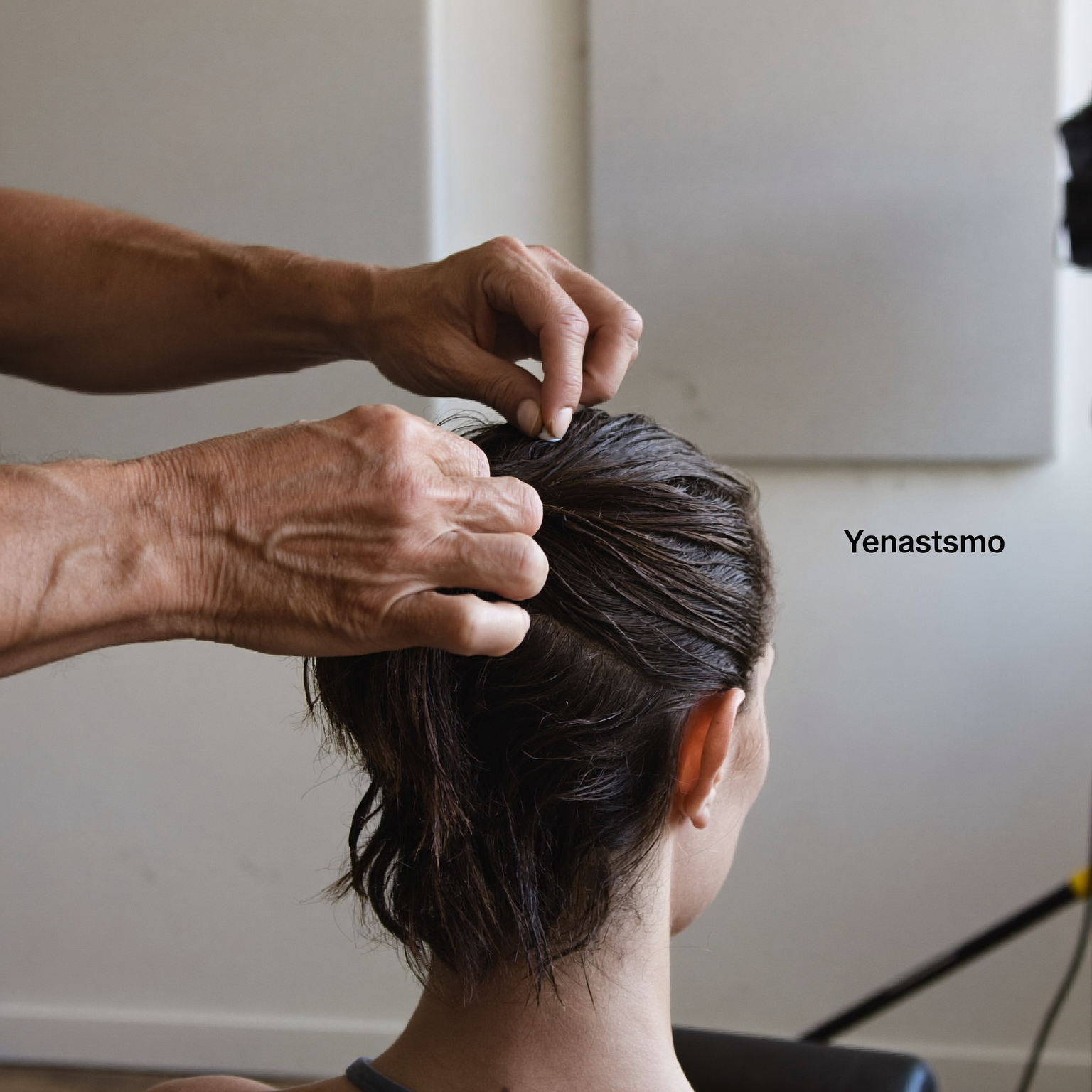
You do not need to wash your hair immediately before a session. Clean, fully dry hair with little or no heavy styling product usually makes it easier for us to part the hair, reach the scalp, and prepare each sensor location.
Sensor placement depends on access to the scalp rather than a particular haircut or hair type. A simple hairstyle and advance notice about extensions, braids, a hairpiece, or a tender area can help us prepare without rushing.
No. We do not require hair that was washed on the same day, and there is no need to add an extra wash solely for your appointment. Ordinary clean hair is usually suitable as long as we can separate it and reach the selected scalp locations.
The main consideration is what sits between the sensor and the scalp. A large amount of oil, dry shampoo, wax, pomade, or similar residue can make the preparation more involved. If your usual routine leaves your hair light and easy to part, you can generally keep that routine.
We also do not evaluate cleanliness in a personal or cosmetic sense. Our focus is practical access. Hair texture, density, length, color, and curl pattern do not determine whether someone is prepared for a visit.
We suggest skipping heavy leave-in products on the day of your visit when that is easy to do. Thick oils, waxes, pomades, root powders, strong-hold sprays, and generous layers of dry shampoo may coat the scalp or make strands difficult to separate.
A small amount of a light product is not automatically a problem. We would rather know what is in your hair than have you disrupt a routine that matters to you. If you are unsure about a particular product, contact us with its name and where you apply it. We can explain whether it is likely to affect access.
Products used only on the ends of long hair are usually less relevant than products applied directly at the roots. Keeping the crown, sides, and areas near the ears relatively free of residue gives us more flexibility during setup.
We ask that you arrive with fully dry hair. Wet hair is harder to section neatly, and added moisture can complicate the consistent preparation of scalp contact points. Dry hair also helps us keep the chair, headrest, cables, and surrounding surfaces comfortable and orderly.
If you wash your hair shortly before leaving home, allow enough time for the roots and lower layers to dry. Hair that feels dry on the surface may still be damp close to the scalp, especially when it is thick, tightly curled, braided while wet, or gathered before drying.
If arriving with damp hair cannot be avoided, let us know before the appointment. We can discuss whether a later start or another visit time makes more sense. We do not use heat tools in the session room, so the simplest plan is to finish drying at home.
Loose hair or a simple, low hairstyle is easiest for us to work with. We need to part the hair at selected locations, so styles that can be released without many pins, tight elastics, or layers of spray generally make setup more straightforward.
A low ponytail can work if it comes out easily. A high bun, tight updo, or complex pinned style may cover locations we need to reach. You are welcome to bring a soft tie or clip for use after we finish placing the sensors.
We never need a particular cosmetic look. Our goal is simply to reach the scalp while handling your hair carefully. If you are coming from work, school, or another commitment, choose the most practical style available and tell us what can or cannot be moved.
Possibly, but we need to know about them before the visit. Braids, extensions, beads, bonded sections, sewn sections, adhesives, clips, and hairpieces can limit access to some scalp locations. Their presence does not answer the question by itself. The placement pattern and how easily we can reach the scalp matter more.
We do not remove installed extensions, undo complex braiding, or detach bonded pieces. We also avoid pulling against anchors or adhesives. Advance notice lets us ask practical questions and decide whether the available access fits our session protocol and device instructions.
A clear description is often enough. You can tell us where the installation sits, whether any sections can be moved, and whether the areas near your ears are accessible. If the arrangement is difficult to describe, you may send a simple photo that does not show your face. We will handle it according to our privacy practices.
Very short hair usually makes the scalp easy to see, but we still prepare each contact point deliberately. Stubble, dense short curls, or a close cut can affect how a small sensor rests, so we do not assume that visible scalp requires no setup.
A shaved head does not need special washing beyond your normal routine. Please avoid applying a heavy oil, balm, or thick sunscreen directly over likely contact areas shortly before the session. If you regularly use a scalp product, tell us what it is rather than leaving out something important without asking.
Sensor contact is a technical part of setup, not a judgment about your hair. It also does not predict what you will notice during or after a session. We check placement according to the protocol and adjust the physical setup when needed.
Tell us before we begin if any area feels sore, unusually tender, recently scraped, sunburned, or otherwise uncomfortable to touch. Please also mention recent cosmetic procedures, new piercings near the ears, or a spot that you do not want handled.
We will not place a sensor over an area that should not be disturbed. Depending on the location, extent, device instructions, and our studio standards, we may use an appropriate alternative location or postpone the visit. We make that decision before proceeding rather than asking you to tolerate uncomfortable contact.
You remain in control of ordinary comfort choices throughout setup. If parting the hair, touching a location, or adjusting an ear contact feels uncomfortable, say so at once. We can pause and reassess without framing discomfort as something you need to push through.
No. We do not wash, cut, blow-dry, or style hair in the studio. We may gently part or move small sections to reach the scalp, and we may use the contact materials specified by our protocol. That preparation is limited to sensor placement.
Your hair may not sit exactly as it did when you arrived. Bringing a comb, soft brush, simple hair tie, or other familiar item can be useful after the session. We do not keep shared styling tools for general use.
If maintaining a specific style is important for an event or work commitment, schedule with enough time to make your own adjustments afterward. You can also tell us before setup which parts of the style should not be moved. We will explain whether those limits leave suitable access.
Your Care and Comfort Matter
Momentous Neurofeedback is a wellness practice using advanced neurofeedback technology to support relaxation and nervous system regulation.
The IASIS i2 Relaxation Neurofeedback System is an FDA-cleared biofeedback device indicated for relaxation training and muscle reeducation.
Our services are not a substitute for medical care, we do not provide medical care, and we do not assess or identify health conditions. Individual experiences vary. If you have questions about your health or whether neurofeedback is appropriate for you, please speak with your licensed healthcare provider.
We are always happy to answer questions about what we do and what you can expect before your first visit.
About the Author
Studio lead
Session practitioner and studio lead
Runs sessions and looks after the room. Explains the equipment before anything is attached, and stops if you want to stop.
Handles the first conversation for most new visitors, which is where expectations get set plainly rather than optimistically.
Signal and Equipment and Regulatory and Claims
The phrase covers several unrelated services that share only the size of the current. Here are the questions that tell them apart.
2 March 2026. 2 minute read.

Signal and Equipment and Sessions
The 10-20 system is a naming convention for scalp positions. Here is how it works and why placement gets written down every visit.
24 February 2026. 4 minute read.

Sleep and Shift Work
Yes, you can nap after a microcurrent neurofeedback session. Learn how to protect your usual sleep timing and plan the rest of your day.
23 September 2026. 7 minute read.