





Sleep and Shift Work
Can I Nap After a Neurofeedback Session?
Yes, you can nap after a microcurrent neurofeedback session. Learn how to protect your usual sleep timing and plan the rest of your day.
23 September 2026. 7 minute read.

Shift-work scheduling
By the operations. Published 10 September 2026. Updated 10 September 2026. 6 minute read.
Drafted with AI assistance, then reviewed, edited where needed, and approved by the author above before publication.
There is no universally better time to book a microcurrent neurofeedback session around a night shift. We recommend choosing the window when you can arrive safely awake, without rushing, and with enough room before your next work, driving, or sleep commitment.
At Momentous Neurofeedback, we use an FDA cleared microcurrent neurofeedback device indicated for relaxation training and muscle reeducation. That indication does not tell us whether a particular person should come before or after work, so we base scheduling guidance on practical details rather than predictions about how someone will feel.
A before-shift appointment can make sense when you are already awake, your transportation is straightforward, and there is a comfortable buffer between the appointment and work. It may also be the simpler choice if the end of your shift is unpredictable or you regularly stay late.
The main question is whether the appointment fits without creating time pressure. Arriving while watching the clock can make it harder to communicate clearly about your day, settle into the chair, and leave at an unhurried pace. We would rather move the appointment than place it inside a narrow opening between home responsibilities and the start of work.
We also avoid assuming that relaxation training means sleepiness. People can describe the same quiet setting differently, and we do not promise a particular feeling during or after a visit. Before-shift scheduling should therefore be based on your transportation plan, job demands, and available buffer, not on an expectation that the session will make you more alert or less alert.
An after-shift appointment can be practical when our studio is already along your route home and you expect to finish work on time. It can remove the need to wake earlier for a separate trip, especially when daytime obligations already divide your available sleep window.
The drawback is that overnight work does not always end cleanly. A late handoff, an added task, or a longer commute can turn a workable appointment into a rushed one. If your end time changes often, scheduling immediately after work may create more friction than choosing a day without a shift.
Your level of wakefulness matters most. If you are struggling to stay awake, do not add another driving segment simply to keep an appointment. Contact us so we can discuss rescheduling. A booking is never more important than making a sound transportation decision.
Leave enough time to check out, collect your belongings, use the restroom if needed, and travel without depending on ideal traffic. The right buffer depends on where you work, when your shift begins, and whether delays are common along your route.
We do not prescribe one fixed interval for every shift worker. Someone working near our Arvada studio has a different planning problem from someone crossing the Denver area during a busy travel period. Weather, road work, school traffic, and seasonal conditions can also change what counts as a comfortable gap.
If your work requires a formal briefing, equipment check, clothing change, or secure entry process, include that in the plan. Your stated start time may not be the time by which you need to arrive. Scheduling from the real arrival requirement gives you a more useful answer than scheduling from the time printed on a roster.
Start with the longest and most demanding drive in the day. If coming after work would place the session between two substantial drives, another appointment window may be easier. If a before-shift visit creates a simple route from home to the studio and then to work, that may be the cleaner option.
Consider the direction of travel as well as distance. A studio appointment that looks close on a map may still add a difficult crossing at a busy time. On the other hand, a slightly longer route with predictable roads and familiar parking may feel more manageable.
Transportation does not have to mean driving yourself. A household member, rideshare, or public transportation may change which appointment windows are realistic. We ask clients to make this decision in advance rather than waiting until the end of a tiring shift to decide how they will get home.
With a rotating schedule, it is often more useful to plan around your position in the work cycle than around a particular weekday. A calendar label such as Tuesday morning tells us less than whether you are coming off several overnight shifts, preparing for the first one, or spending that day away from work.
Tell us when your schedule changes direction and which transitions are hardest to organize. We can look for appointment windows that reduce extra travel and avoid compressing your available time. This is a scheduling conversation, not a prediction about what any particular timing will do.
Consistency can still be practical even when clock times change. For example, you may choose appointments on nonwork days, or always book before the first overnight shift in a work block. The useful pattern is one you can follow without repeatedly sacrificing sleep time, rushing from work, or relying on a shift ending exactly as planned.
A day off is often the simplest starting point when you do not yet know which appointment window fits your routine. It removes the immediate pressure of reporting to work and gives you a clearer view of the travel, check-in, session, and departure process.
A workday may still be preferable when days off are reserved for family, errands, or recovery from a demanding schedule. Convenience is personal. We do not assume that an open calendar means a person has unlimited energy or attention for another trip.
When comparing the options, look at the entire day rather than the appointment alone. Include when you expect to wake, who depends on you at home, whether you need to cross town, and when you next need to be at work. The best operational fit is usually the one with the fewest tight transitions.
Tell us your usual start and end times, whether those times frequently change, and where the studio sits relative to home and work. We also need to know if you are on call, if you may be held past the scheduled end of a shift, or if you must report early for preparation.
Let us know whether you plan to sleep shortly before or after the appointment. We will not make assumptions about your sleep pattern based only on the fact that you work overnight. Some people keep a stable daytime sleep window, while others change their schedule across workdays and days off.
You can review our guidance for [shift workers](/who-we-work-with/shift-workers) before contacting us. For questions about whether a session is an appropriate fit, see [safety and suitability](/sessions/safety-and-suitability). If the timing remains unclear, a [consultation about scheduling](/book/consultation) gives us space to map the route and commitments with you.
Compare logistics first. Note whether you arrived on time, whether the route felt manageable, how much schedule pressure you carried, and whether the appointment displaced sleep or another responsibility. These observations are concrete and do not require you to assign a broad meaning to one visit.
If both windows are workable, keep the surrounding routine reasonably similar when you compare them. Large differences in workload, travel, household demands, or time awake can make the comparison less useful. The purpose is not to search for a promised response. It is to identify which booking pattern is easier to maintain.
Avoid making the decision solely from what you expected to feel. A practical schedule should still work on an ordinary, imperfect day. Our overview of [session frequency and scheduling](/sessions/session-frequency) explains additional factors you can discuss with us when planning future visits.
Your Care and Comfort Matter
Momentous Neurofeedback is a wellness practice using advanced neurofeedback technology to support relaxation and nervous system regulation.
The IASIS i2 Relaxation Neurofeedback System is an FDA-cleared biofeedback device indicated for relaxation training and muscle reeducation.
Our services are not a substitute for medical care, we do not provide medical care, and we do not assess or identify health conditions. Individual experiences vary. If you have questions about your health or whether neurofeedback is appropriate for you, please speak with your licensed healthcare provider.
We are always happy to answer questions about what we do and what you can expect before your first visit.
About the Author
Operations
Scheduling and organization programs
Books sessions, manages seats for organization programs, and answers the messages that arrive through the contact form.
Owns the anonymized identifier process that keeps a funding organization from seeing who attended.
Sleep and Shift Work
Yes, you can nap after a microcurrent neurofeedback session. Learn how to protect your usual sleep timing and plan the rest of your day.
23 September 2026. 7 minute read.

Sleep and Shift Work and Sessions
A wind-down routine assumes darkness and a quiet house. Night shift work removes both. What changes, and what still works.
10 March 2026. 5 minute read.
Signal and Equipment
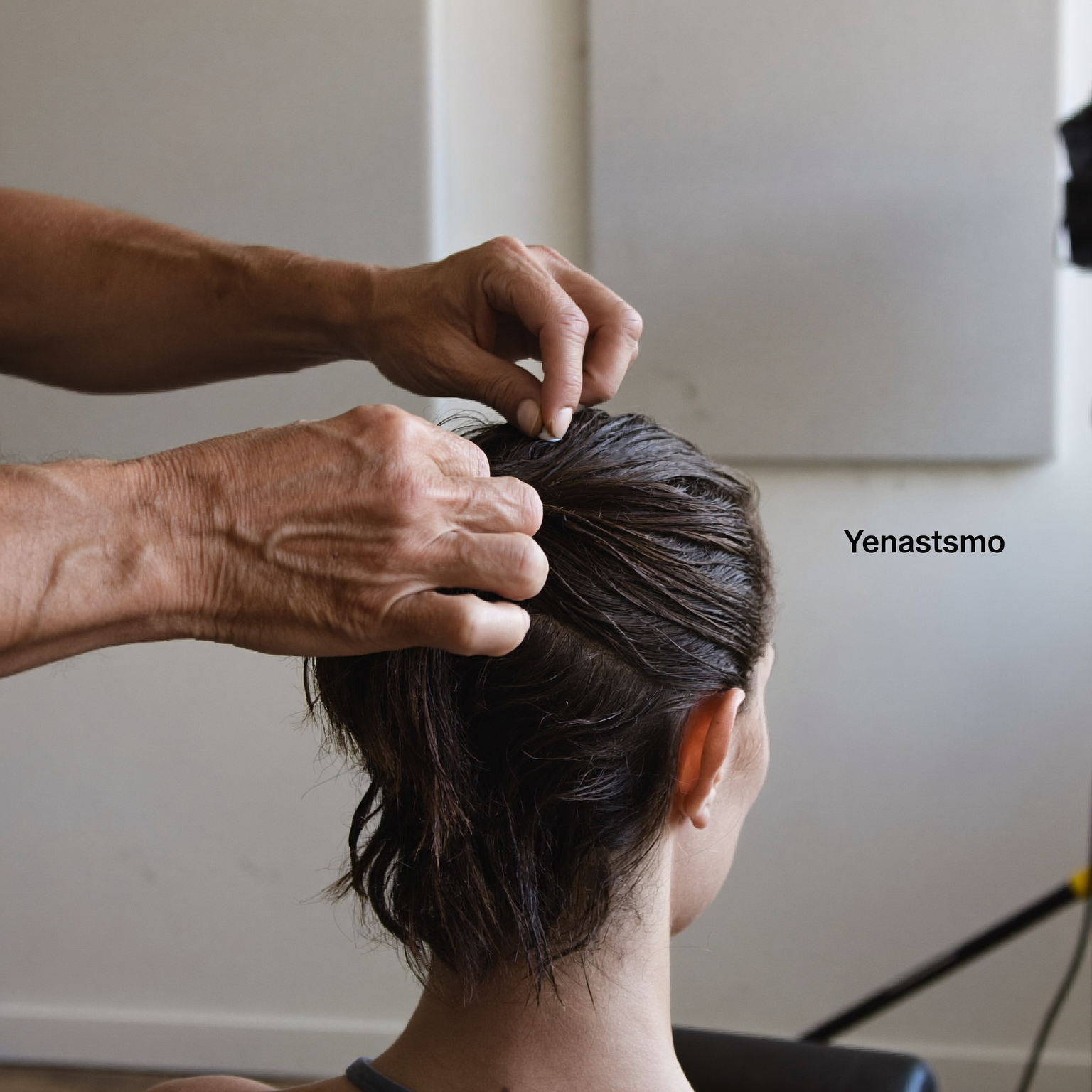
Learn how clean, dry hair, light styling products, and simple hairstyles make scalp sensor placement easier before a studio session.
16 September 2026. 6 minute read.